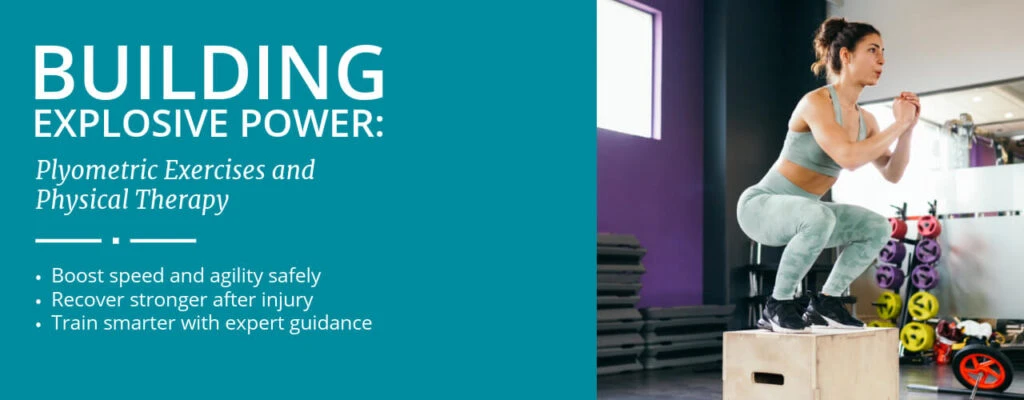
Looking for a way to boost speed, strength, and agility? Plyometric exercises and physical therapy can work together to help you build explosive power, improve movement patterns, and recover from injury. Whether you’re an athlete aiming to improve your performance or rehabbing from a sports-related injury, plyometrics can be a powerful tool, especially when guided by the ElmTree Physical Therapy team.
What Are Plyometric Exercises?
Plyometric exercises, sometimes called “jump training,” involve quick, explosive movements that engage your muscles in a stretch-shortening cycle. That means your muscles lengthen (eccentric phase) and then rapidly shorten (concentric phase) to produce force.]
This type of training is designed to increase power, coordination, and overall athletic performance.
Examples of Plyometric Exercises
- Jump squats
- Box jumps
- Burpees
- Lateral bounds
- Medicine ball slams
- Jump lunges
These moves may look simple, but they challenge your neuromuscular system and require proper form and progression to avoid injury.
Why Plyometric Exercises Are So Effective
Plyometric training offers a wide range of benefits when incorporated into a structured physical therapy program. These exercises can help improve:
Muscle Power
Generate more force in less time—ideal for sprinting, jumping, and fast directional changes.
Balance and Coordination
Enhance joint stability and motor control, especially after injury.
Joint and Tendon Strength
Strengthens connective tissue when appropriately progressed.
Speed and Agility
Quick bursts of movement improve reaction time and mobility.
Calorie Burn
Plyometrics are metabolically demanding, supporting overall fitness.
For recovering athletes or active individuals, these benefits can significantly improve performance and the speed of recovery after an injury.
How Plyometric Exercises and Physical Therapy Work Together
When introduced safely, plyometric exercises and physical therapy can complement each other. Our licensed physical therapists understand how to use plyometrics to rebuild strength, enhance movement efficiency, and reduce injury risk. Here are some of the ways these exercises can fit into your recovery plan:
- Plyometrics simulate real-life or sport-specific movements, helping patients transition from rehab to full activity.
- Our therapists guide patients through progressive loading phases, starting with low-impact drills before advancing to more intense exercises.
- We’ll tailor your program based on your injury, goals, and baseline strength or mobility.
- Emphasizing proper landing mechanics and joint alignment helps avoid re-injury.
Who Can Benefit from Plyometric Training in PT?
Plyometric exercises aren’t just for elite athletes. Many people in physical therapy benefit from this type of training when it’s part of a carefully supervised program, including:
- Athletes returning to sport after ACL or ankle injuries
- Runners or sprinters looking to improve stride power
- Active adults rehabbing after lower limb surgery
- Youth athletes working on coordination and injury resilience
- Weekend warriors wanting to boost performance
Our team can let you know when plyometrics are appropriate in your recovery process. We’ll modify intensity, reps, and rest periods to ensure safety and maximize benefit, especially for those with previous knee, ankle, or hip issues.
Ready to Add Power to Your Rehab?
Plyometric exercises and physical therapy are a winning combination for anyone looking to improve performance, rebuild strength, or prevent injuries. With expert guidance, these powerful movements can be safely added to your rehab or training program.
If you’re ready to boost your recovery or elevate your athletic potential, the experienced team at ElmTree Physical Therapy can help. We’ll build a customized plan to help you move better, feel stronger, and return to doing what you love.
Schedule an appointment at our Hawley, PA, Honesdale, PA, and Lake Ariel, PA clinic today to learn more.